

What Is Boarding Up in Luton? (And When You Actually Need It)
Boarding up is the process of securing a damaged, broken, or vulnerable opening—most commonly a window, door, or shopfront—using sturdy sheet materials and anti-tamper fixings to secure the property quickly and reduce the risk of further loss. If you’re dealing with a smashed window or a forced entry in Luton, boarding up is often the fastest way to make safe the building until proper repairs or replacement glazing can be arranged.
If you need help now, call us and we’ll talk you through the safest next steps and give you a realistic ETA based on current workload. Need urgent assistance? Call 01582 377 256.
Boarding up: the plain-English definition
In practical terms, boarding up means:
- Covering an opening (glass, frame, panel, or even part of a roofline) with a strong board
- Fixing it in a way that prevents removal from the outside
- Leaving the property weather-resistant and secure enough to be left unattended (where possible)
It’s not a cosmetic repair and it’s not a replacement for glazing or joinery—boarding is a temporary security and safety measure that buys you time, especially after burglary, vandalism, an accident, or storm damage.
If your situation is urgent (night-time break-in, exposed shopfront, compromised entrance), see our dedicated emergency boarding up page.
What boarding up is designed to achieve (and what it isn’t)
Boarding up has three core purposes:
- Safety – removing immediate hazards like jagged glass, unstable frames, or exposed openings
- Security – reducing the chance of repeat entry, theft, or further damage
- Weather protection – limiting wind and rain ingress until permanent works are arranged
What it isn’t:
- A guaranteed weatherproof “seal” in every scenario (some frames/brickwork may be too damaged)
- A substitute for glazing, lock replacement, or structural repair
- A complete answer for long-term vacant-property security (that may call for screens or a temporary steel door)
If you’re unsure what’s appropriate, we’ll explain options before proceeding—especially if the frame or surrounding fabric is too damaged for non-destructive methods.
When is boarding up needed?
People usually call us for boarding up in Luton and across LU1–LU7 after something sudden, stressful, and disruptive. Typical triggers include:
- A board up broken window after vandalism or accidental breakage
- A forced door where you need to board up door panels or stabilise the entry point
- Commercial damage where you need the shopfront boarded up before reopening
- Storm damage where wind has loosened glazing or dislodged panels
- Fire or flood incidents where openings are compromised and the building can’t be safely left exposed
If your property has been affected by an incident, these pages may help:
What gets boarded up? (Windows, doors, shopfronts, roofs)
Boarding up isn’t one-size-fits-all. The approach changes based on the opening, the surrounding structure, and how long the property needs to remain secure.
Window boarding (most common)
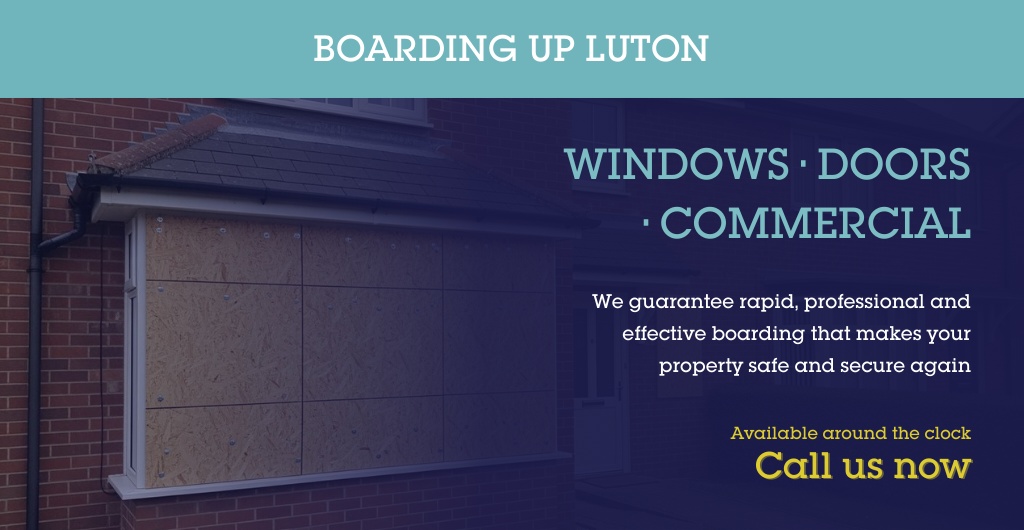
If you’ve had a smashed window, boarding prevents access and helps reduce draughts and water ingress. We typically size and cut panels on-site, then fix them using methods suited to the frame and reveal.
Read more about window boarding in Luton.
Door boarding and temporary doors
After a forced entry, the door leaf or frame can be too compromised to lock. Depending on damage, boarding may be used to secure the opening, or a temporary steel door may be a better medium-term option—particularly for unattended properties or repeated targeting.
More detail: door boarding.
Shopfront boarding (commercial glazing and larger openings)
Retail and commercial frontage often requires larger sheets, a stronger fixing strategy, and careful attention to public safety—especially if the premises is on a busy route or you need to reopen soon.
See shopfront boarding.
Roof and skylight boarding (overhead vulnerabilities)
If a skylight or roof opening is damaged, the goal is to secure access and reduce water ingress while keeping weight and fixing points safe. Access and risk management matter here—especially in poor weather or low light.
Learn more about roof boarding.
Materials we use (and why it matters)
Good boarding up isn’t just “put a board over it”. Material choice affects strength, weather resistance, and how well the panel holds fixings.
We typically use:
- 18mm exterior-grade plywood for most window, door, and shopfront openings where a robust, durable sheet is needed
- 12mm OSB for smaller openings or where the site conditions and risk profile allow
We match thickness and type to the size of the opening and exposure. For example, a large commercial panel generally benefits from heavier-duty material and a fixing approach that resists tampering from the outside.
We’ll also consider:
- The condition of the frame/reveal (sound brick vs crumbling mortar, split timber, twisted uPVC)
- Whether the building is occupied or vacant
- Whether the area will be unattended overnight (increased need for anti-tamper measures)
How boarding up is fixed (anti-tamper, safe access, and minimal extra damage)
Fixing method matters as much as the board itself. The aim is to secure property without creating unnecessary additional damage—while still making it hard to remove from outside.
Common approaches include:
- Anti-tamper fixings where appropriate, to reduce the risk of removal
- Fixing into suitable structural points (not into loose or failing material)
- Internal bracing or battening when needed for strength and to spread load
- Careful edge clearance to avoid pressure on remaining glass or unstable frames
If the surrounding frame is too damaged for non-destructive methods, we won’t guess. We’ll explain what’s possible, what isn’t, and what the implications are before any work goes ahead.
What happens when you call us (and what we need from you)
When you contact Boarding Up Luton, we keep things practical and calm—because most people ringing us are dealing with a stressful situation.
1) We’ll ask a few key questions
To help us prepare the right materials and give a realistic ETA, we’ll usually ask:
- What’s been damaged (window/door/shopfront/roof)
- Approximate size and floor level
- Is the property occupied right now?
- Is it safe at the address (e.g., police already attended, no immediate threat)?
- Any access issues (rear access, communal entry, shutters, scaffolding)
2) We attend and make safe
On arrival, we assess hazards first (loose glass, unstable frames, exposed openings), then secure with the most appropriate boarding method for the situation.
We don’t quote guaranteed arrival times—traffic, weather, and active emergency workload can all affect attendance. If you call, we’ll give you the most realistic expectation we can at that moment.
3) You receive documentation
We can provide what most insurers and property managers typically need, such as:
- Itemised invoice
- Description of works completed
- Time-stamped photos (where possible and appropriate)
We’re not loss adjusters or legal advisors, but we can help you keep the paperwork clear for your claim. See: insurance claims guidance.
Is boarding up covered by insurance?
Often, emergency boarding up and making safe measures can be covered—particularly after burglary, vandalism, or storm damage—but policies vary widely.
A few practical pointers:
- Report incidents appropriately (police for break-ins; your insurer’s claims line for storm/fire/flood)
- Keep your reference numbers
- Take photos before anything is moved, if it’s safe
- Don’t delay securing the opening—secondary damage can complicate claims
For a more detailed walkthrough, visit our insurance claims page.
Boarding up vs other ways to secure a property
Boarding is ideal when you need a fast, strong, temporary barrier. But it’s not the only option.
When boarding up is the right choice
- Short-term security while glazing/joinery is arranged
- Immediate protection after a break-in or impact
- Situations where you need the opening closed today (or out of hours)
When another solution might be better
- Repeated targeting or longer vacancy periods (steel screens can be more durable)
- A doorway that needs frequent access (temporary steel door can allow controlled entry)
- Sites requiring perimeter control rather than opening protection (temporary fencing)
If perimeter safety is your main issue rather than an opening, see temporary fencing.
What you can do right now if you’ve got a broken window or door
If you’re reading this because something has just happened, focus on safety first.
- If there’s a threat or crime in progress, call 999.
- If it’s safe, keep people away from the damaged area (especially children and pets).
- Don’t try to clear shattered glass with bare hands—use thick gloves and proper tools.
- Take a few photos for your insurer (only if safe and sensible).
- Call us to arrange temporary boarding and to make safe the opening.
If it’s urgent and you need someone to board up tonight, use our emergency page: 24/7 boarding up.
FAQs: What is boarding up?
Does boarding up stop a burglary from happening?
It reduces opportunity by removing easy access and creating a visible barrier, but no temporary measure can guarantee prevention. The goal is to make entry far harder and discourage repeat attempts, especially when the property will be unattended.
Will boarding up damage my window frame or brickwork?
We aim to fix boards securely while avoiding unnecessary extra damage. However, if the frame or surrounding reveal is already weak or broken, any secure fixing may require a more robust method. We’ll explain this before starting.
How long can boarding stay in place?
It depends on exposure, the size of the opening, and whether the building is occupied. Boarding is intended as a temporary measure while you arrange permanent repairs—if you need longer-term security, we can discuss alternatives.
Can you board up a shopfront so I can reopen quickly?
In many cases, yes. Boarding can secure the opening so the premises can be locked and protected while you arrange glazing. The right method depends on the opening size and how the frontage is constructed—see shopfront boarding.
Do you cover my area in the LU postcodes?
Yes—our coverage includes Luton and surrounding LU districts (LU1–LU7). If you’re unsure, check areas we cover or call us and we’ll confirm.
Is boarding up only for homes?
No. We regularly secure residential homes, commercial premises, and vacant properties. If you manage a site, see commercial properties and vacant property security.
Ready to secure your property?
If you need boarding up in Luton or anywhere across LU1–LU7, we’ll help you make safe and secure property with clear communication and straightforward documentation.
Need help now? Call 01582 377 256 or email us.
