


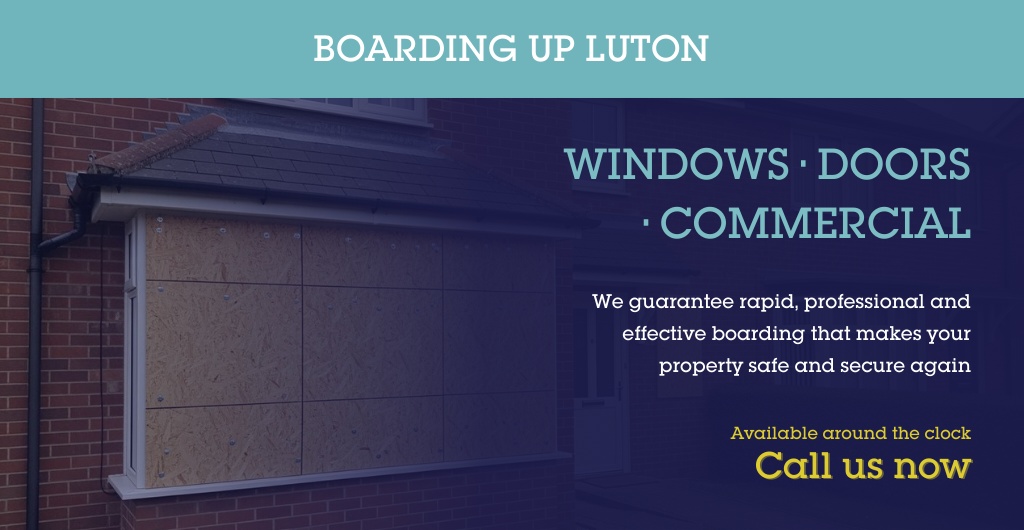
Vacant Property Boarding Up in Luton (LU1–LU7)
A vacant or void property can go from “quiet” to “compromised” very quickly. One broken pane, a forced door, or an unsecured rear elevation is often all it takes for opportunistic entry—especially if the building looks unoccupied. If you need vacant property boarding up in Luton, we help landlords, letting agents, housing providers, and facilities teams secure empty buildings across LU1–LU7 with practical, insurer-friendly methods.
If this is urgent (forced entry, smashed glazing, or you need to make safe today), call us and we’ll talk you through the quickest way to secure the property and reduce further damage.
Need help now? Call 01582 377 256 for immediate assistance.
When vacant properties in Luton typically need boarding up
Void properties don’t always start with a dramatic break-in. Many call-outs begin as “something doesn’t look right” and escalate quickly once an opening is found.
Common scenarios we’re asked to deal with include:
- A smashed window noticed during a routine visit, often at ground floor or a side elevation
- Board up broken window requests after vandalism or an attempted burglary
- Board up door jobs where a rear or communal door has been forced, or the lock has failed
- Temporary boarding while glazing is ordered, especially for older or non-standard window sizes
- Squatter entry risk where an unsecured opening is likely to be targeted again
- Properties left empty after tenant changeover, probate, or refurbishment pauses
- Sites that need shopfront boarded up style protection (larger panes) even if the unit is currently unlet
- Weather-related damage that leaves an opening exposed and needs an urgent make safe
If you’re dealing with an active incident or out-of-hours discovery, our emergency boarding up service is the right place to start.
Why securing a void property is different from a normal call-out
Vacant properties need a slightly different approach because:
- They may be unattended for days or weeks, so fixings must resist removal from outside
- Small weaknesses become big problems (water ingress, fly-tipping, further break-ins)
- You may need evidence for an insurer or property manager audit trail
- There can be unknown internal hazards (loose glass, damaged frames, unsafe floors)
- Access can be complicated (missing keys, trades on site, alarm not set, gated rear access)
We’ll ask a few practical questions on the phone to plan the right method and minimise disruption: what’s damaged, whether the frame is intact, whether anyone can provide access, and whether it’s likely to remain void short-term or medium-term.
Our methods for vacant property boarding up (what we use and why)
There isn’t one “best” material for every job. The right solution depends on how long the building will be empty, how exposed the opening is, and what condition the frame is in.
Plywood boarding (typical for windows and smaller openings)
For many void properties, we use 18mm exterior-grade plywood for strong, reliable protection on windows and vulnerable panels—particularly where the opening needs to be secured quickly and the surrounding structure is sound.
Why it’s used:
- Strong resistance to impact compared with thinner sheet materials
- Better for longer periods than lightweight boards
- Takes secure fixings well (important if the property will be unattended)
This is commonly delivered through our window boarding in Luton work, adapted to the specifics of empty properties.
OSB (for smaller or lower-risk openings)
For some smaller openings or lower-risk positions, 12mm OSB can be suitable. We’ll recommend it only where it’s appropriate for the exposure and security risk.
We won’t “force” OSB everywhere—if the property is clearly at risk, we’ll be upfront that plywood (or a more robust option) is the better choice.
Anti-tamper fixings and non-destructive options where possible
On void properties, we favour anti-tamper fixings where they’re compatible with the substrate because they:
- Reduce the chance of removal from outside
- Deter repeat attempts
- Help keep the building secure between inspections
Where the frame and reveals allow, we aim for methods that avoid unnecessary damage. If the structure is too compromised for a non-destructive method, we’ll explain the options before we proceed.
Temporary steel doors (for repeated access points and forced entries)
If a door has been kicked in or the frame is unstable, boarding alone may not be the best medium-term answer—especially if contractors need access during a refurb.
In those cases, we may recommend a temporary steel door, which gives:
- A more robust barrier than timber boarding for entry points
- A proper locking arrangement suitable for ongoing site access
- Better resistance if the property is likely to be targeted again
This falls under our door boarding service approach, and we’ll advise whether a steel door is proportionate for your risk level and timescale.
Larger commercial-style panels for empty units
Vacant retail or mixed-use properties often need larger sheets and a different fixing strategy, particularly if the glazing spans wide bays.
If you’re securing an unoccupied unit, our shopfront boarding methods can help protect the frontage and reduce the chance of repeat damage.
Rooflights and skylights (often overlooked)
On empty buildings, roof access can be a weak point—especially where scaffolding is present or there are flat roof sections.
If there’s damage at height, we can advise on roof boarding and safe access considerations. We’re honest here: if conditions make immediate work unsafe, we’ll explain what can be done now versus what needs additional access equipment.
What to expect when you call us (step-by-step)
When you contact us, we keep it simple and practical—especially if you’re coordinating from a distance.
-
Quick assessment on the phone
We’ll ask what’s happened (break-in, vandalism, storm damage), the rough opening size, and whether the frame is intact. -
Realistic ETA and attendance planning
We don’t give guaranteed arrival times—traffic, weather, and existing emergencies vary—but we prioritise urgent calls and will give you a realistic ETA. -
On-site survey and safety check
We check for loose glass, unstable frames, and any hazards typical in void buildings. -
Boarding/temporary security installation
We fit the right material and fixings for the risk level and expected vacancy period. -
Documentation for your records
If you need it, we can provide itemised invoices and a clear statement of works. Time-stamped photos are available on request—useful for insurers and property management sign-off.
If your situation is related to a specific incident, you may also want to read:
Typical vacant property call-outs (what we see most)
Vacant buildings tend to generate repeat patterns. Here are the most common types of jobs we attend across Luton and the wider LU area:
1) Ground-floor window breach
A frequent call is a smashed window at the side or rear where it’s less visible. The priority is to board up broken window openings quickly to prevent entry, weather ingress, and further damage.
2) Forced back door or failed lock
Even if the glazing is intact, a compromised door can make the whole building insecure. We can board up door openings where needed, and where ongoing access is required we’ll discuss stronger options via door boarding.
3) Vacant shop or unit with damaged frontage
An empty unit is an obvious target. A single broken pane can turn into repeated attacks if it’s not secured. We can get a shopfront boarded up in a way that reduces the chance of panels being pulled away.
4) Refurb paused; building left exposed
Properties mid-works often have temporary openings or partially removed doors/windows. We can fit temporary boarding to keep the site secure while trades re-schedule.
5) Post-incident securing after fire or flood
We don’t do remediation (e.g., smoke odour treatment), but we do secure openings and help stabilise security after the incident. See fire damage securing or flood damage securing for what we can and can’t do.
Reducing risk while the property is empty (practical guidance)
Boarding up is one part of keeping a void property under control. A few practical steps can reduce repeat incidents:
- Inspect after storms: a small failure in glazing or fascia can become an entry point
- Keep records of site visits: dates, observations, and photos help with insurance and compliance
- Don’t leave tools/materials visible: they can be used to force entry
- Use appropriate security for duration: short-term plywood may be fine for a week; longer void periods might need tougher measures
- Secure secondary access: side gates, rear alleys, and lower roofs are common routes
If you’re unsure what level of security your insurer expects, our insurance claims guidance explains the type of documentation and information providers commonly request. We’re not loss adjusters, but we can support you with clear paperwork.
Vacant property boarding up across Luton and LU postcodes
We cover vacant and void property boarding up across LU1, LU2, LU3, LU4, LU5, LU6 and LU7, including residential streets, mixed-use buildings, retail units, and small industrial sites.
If you need local pages for quick reference, you can start here:
If you’re managing multiple properties, it may help to review our pricing approach to understand what drives cost (without vague “from £x” promises), or visit our FAQs for common questions.
FAQs: vacant property boarding up in Luton
Do you handle long-term vacant properties as well as short-term voids?
Yes. The method depends on risk and timescale. For short-term voids, plywood or suitable sheeting is often enough. For longer periods or repeat incidents, we may recommend more robust solutions via door boarding or commercial-grade approaches.
Can you board up if the frames are damaged or rotten?
Often, yes—but the fixing method may change. If the frame won’t hold secure fixings, we’ll explain alternatives and what’s realistic. Where non-destructive methods aren’t possible, we’ll be upfront before we proceed.
Is boarding up covered by insurance for an empty property?
Sometimes—policies vary and vacancy clauses can be strict. We recommend notifying your insurer early and keeping your incident details (and a police reference number where relevant). Our insurance claims page outlines what documentation is typically helpful.
I’ve discovered a break-in during an inspection. What should I do first?
If there’s any chance someone is inside or it’s unsafe, call the police first. Once it’s safe to do so, take photos of damage (if you can without entering) and then call us to make safe and secure property openings as quickly as possible. If it’s urgent, use our emergency boarding up page.
Can you work out of hours for vacant property call-outs?
Yes. Many void-property issues are discovered evenings or weekends—especially after alarms trigger or neighbours report damage. We do out of hours attendance where needed, with realistic ETAs given on the phone.
Do you provide photos and paperwork for property managers and landlords?
We can provide time-stamped photos on request, plus an itemised invoice and statement of works. This is useful for landlord records, facilities management reporting, and insurance submissions.
Can you secure a vacant shop unit as well as residential houses?
Yes. Vacant units often need larger panels and stronger fixings, particularly for wide frontages. See our shopfront boarding page for how we approach those openings.
How quickly can you attend across LU1–LU7?
Attendance depends on demand, time of day, and travel conditions. We prioritise urgent jobs and will give you a realistic ETA when you call—without making promises we can’t guarantee.
Ready to secure a vacant property in Luton?
If you’re managing a void property, dealing with a break-in, or need temporary boarding to keep a building safe during works, we can help.
Ready to get started? Call 01582 377 256 or email us for a free, no-obligation quote.
